Photo: Pietro Battistoni / Pexels
Why Everyone Is Talking About CERN Right Now: The Astrology of CERN
June 26, 2025
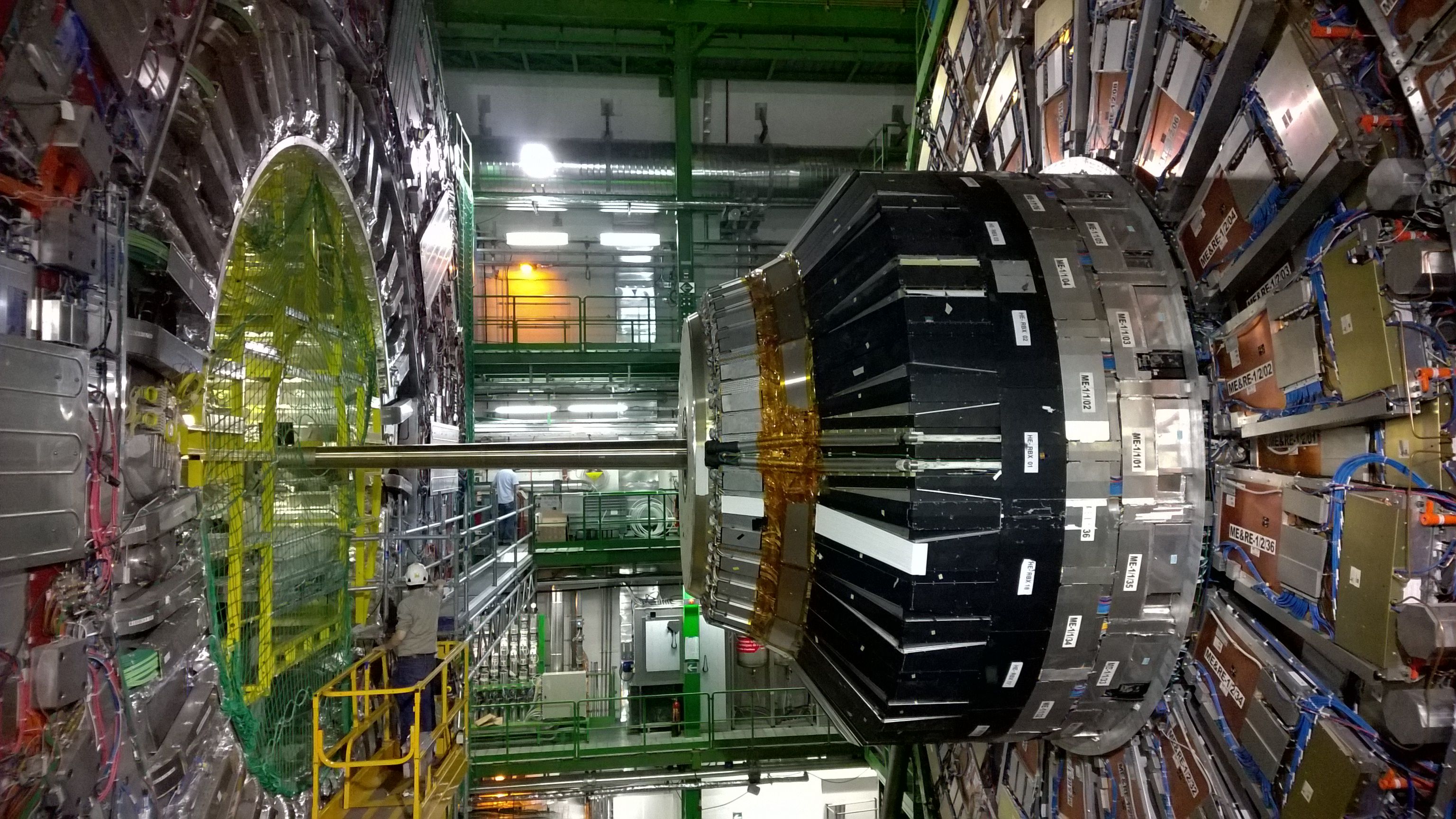
A lot of people are talking about CERN right now. The world's largest particle accelerator is about to enter a major shutdown after its latest round of experiments. What exactly has CERN accomplished? Why are scientists pausing one of the most advanced machines ever built? Are they simply upgrading the technology, or is there something more going on? The internet is full of theories claiming CERN is opening portals, creating alternate timelines, or affecting the fabric of reality. While there is no credible scientific evidence supporting those ideas, the real story may be even more fascinating.
As I began researching CERN's upcoming pause, one detail caught my attention. The shutdown coincides with Mercury Retrograde, a period astrologers often associate with review, maintenance, and reassessment. That made me curious. What if we looked not only at the science, but also at the astrology? What does CERN's birth chart say about its mission, and what might the symbolism of this planned pause reveal?
CERN was founded in 1954 to answer one of humanity's oldest questions: What is the universe made of? Deep beneath the border of France and Switzerland sits the Large Hadron Collider, a 17-mile underground ring where protons are accelerated to nearly the speed of light before colliding. Those collisions briefly recreate conditions that existed just after the Big Bang, allowing scientists to study the smallest known building blocks of reality. Their work led to the discovery of the Higgs boson in 2012, but many of the universe's greatest mysteries remain. Scientists still don't know the nature of dark matter, dark energy, or how gravity fits into the quantum world. Every discovery seems to uncover another question.
The current shutdown is part of a long-planned upgrade that will transform the LHC into the High-Luminosity Large Hadron Collider. The goal isn't to make it dramatically more powerful. Instead, scientists hope to create many more particle collisions and collect far more data. If an extremely rare event happens only once in billions or trillions of collisions, increasing the number of opportunities may finally allow them to observe it. Sometimes discovery comes through patience as much as power.
Looking at CERN's founding chart, one feature immediately stood out: an extraordinary concentration of planets in Scorpio. Whether you see astrology as symbolic, psychological, or spiritual, Scorpio has long been associated with investigation, transformation, hidden knowledge, and the desire to uncover what lies beneath the surface. It is difficult to imagine a more fitting signature for an institution devoted to exploring the invisible structure of reality. CERN exists to look beneath the atom, beneath matter itself, and perhaps one day beneath some of our deepest assumptions about the universe.
The chart for CERN's planned shutdown tells a different story. Instead of emphasizing discovery, it reflects a period of review, rebuilding, and preparation for what comes next. The Sun in Cancer speaks to stewardship and preservation, while the Moon in Capricorn points toward responsibility, assessment, and long-term planning. Add Mercury Retrograde to the picture, and the symbolism becomes even more interesting. Astrologically, this doesn't feel like an ending. It feels like a carefully timed pause to refine, repair, and prepare before the next phase of exploration.
The stars don't explain CERN's science, but they do offer a beautiful symbolic reflection of humanity's endless desire to keep exploring.
Perhaps that's what fascinates me most about CERN. The internet often imagines mysteries where there may be none, while science continues uncovering mysteries that are very real. Whether viewed through the lens of physics or astrology, CERN reminds us that humanity has never stopped searching for what lies beneath the surface. We build telescopes to look across the universe and particle accelerators to look inside the atom for the same reason: we are curious. We want to know how reality works. The stars don't explain CERN's science, but they do offer a beautiful symbolic reflection of humanity's endless desire to keep exploring.